
- Program:
- Urban Barcode Project
- Year:
- 2025-26
- Research Topic:
- Biodiversity & trade
- Taxonomic Group Studied:
- Plants
Project:
Analysis with bioindicators: Mosses within Urban Environment
- Students:
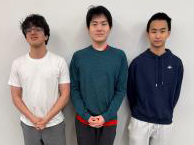
- Ting Chen, Lucas Shi, Shaurya Deshmukh
- School:
- The Browning School, Manhattan
- Mentors:
- Akira Wong
Abstract:
Air pollution is a persistent problem in New York City, and current monitoring systems often fail to capture fine-scale, localized variation in air quality. Mosses (bryophytes) are effective biological indicators of air pollution because they absorb nutrients directly from the atmosphere and readily bioaccumulate airborne contaminants. This study investigates the relationship between moss species diversity and air pollution across different urban micro-climates in New York City. Moss samples will be collected from high-pollution sites (e.g., FDR Drive) and low-pollution sites (e.g., Central Park). Species identification will be conducted using DNA barcoding with the rbcL gene, and biodiversity will be quantified using the Shannon Diversity Index. We hypothesize that moss diversity will be inversely related to pollution levels, with lower diversity in high-traffic areas. This project aims to evaluate moss diversity as a reliable, low-cost bioindicator of air quality in dense urban envir
