
- Program:
- Barcode Long Island
- Year:
- 2025-26
- Research Topic:
- Biodiversity & trade
- Taxonomic Group Studied:
- Animals: Invertebrate
Project:
Barcoding Tarantula species (Theraphisdae) Using DNA Extracted from the Tarsi of Molts
- Students:
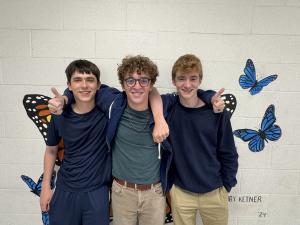
- Jay Graves, Aidyn Beebe-Edwards, Kannon Davis
- School:
- Westhampton Beach High School, Suffolk
- Mentors:
- Dianna Gobler
Abstract:
Tarantulas (Theraphosidae) are ecologically significant predators whose conservation is threatened by habitat degradation, overexploitation for the pet trade, and climate change. Accurate species identification is critical for conservation, population monitoring, and trade regulation, yet morphological methods are often unreliable, particularly for juvenile specimens or molts. This project employs DNA barcoding of tarsal tissue from tarantula molts to provide a non-invasive and replicable approach for species-level identification. Genomic DNA will be extracted using silica-based methods, and the mitochondrial cytochrome oxidase I (COI) gene will be amplified via PCR and sequenced. Resulting sequences will be analyzed against reference databases, and phylogenetic trees will be constructed to resolve species relationships. This methodology facilitates improved taxonomic resolution, informs conservation strategies, and enhances understanding of tarantula biodiversity and evolutionary rela
